[et_pb_section admin_label=”section”]
[et_pb_row admin_label=”row”]
[et_pb_column type=”4_4″][et_pb_text admin_label=”Text”]


If there were concerns that Joe Hortiz may take a season or two to acclimate to his first General Manager gig, his performance through May should all but quell all remaining doubt for Chargers fans. Mere months into the job and it’s clear Hortiz has more foresight and confidence than fans ever saw in the Tom Telesco era.
We’ll revisit the offseason in it’s entirety as Opening Kickoff draws near, but there was one move Joe Hortiz made that is difficult to not procedurally compare against his predecessor. Hortiz’s trade-up for Ladd McConkey, and his overall execution of this draft, should be argued as a master class by Chargers fans.
An Immediate Disparity Between Telesco and Hortiz
Two years ago, frustrated with Tom Telesco’s performance as a GM, I tried searching for measurable ways to grade his draft performance against his peers. The project grew in scope into a piece on creating systematic approaches to “beating” the Jimmy Johnson Draft Chart, as evidence piled up that draft trades were significantly correlated to the values this chart set decades ago, and that Tom’s trades were routine examples of how smart teams use the chart’s inefficiencies to best lesser GM’s.
The biggest takeaways were that Tom could be defended as an average talent evaluator on a per-selection basis, but he routinely drafted from a pick-deficit because of his inability to build surplus draft capital through compensatory picks or trades, and this caused his overall “value” accrued through the draft (with Pro Football References “AV” metric as the measuring stick) to rank 27th in the league. Tom compounded this deficiency by fairly regularly trading up early in his GM career, and each trade netted a player that didn’t earn a second contract in powder blues.
Joe Hortiz was asked about his team-building philosophy in his opening presser, and he started his explanation by speaking glowingly about compensatory picks:
I’m a big fan of comp picks. Alright? Number one. Let’s create that chain. Let’s create that cycle of comp picks. How do you do that? You gain as many picks as you can early, and then you draft, develop, and then make smart decisions on who you re-sign, obviously you want to extend your core players, but then there’s some players you’re not able to because of the cap. But you want to create that cycle of comp picks.
Hortiz highlighted the importance of establishing a war chest of draft capital. Regardless of the round the picks come in, Joe wants them, and they are the foundational piece to how he constructs his rosters. It’s a point that should be hammered home time and time again: compensatory picks are the only systematic divergence from the NFL’s obsession with encouraging parity within the league.
While Telesco was able to bring in solid talent in the first two rounds of the draft, his vision would start to blur and he would take significant reaches against the consensus board in round three for developmental players. The rest of his drafts often seemed like dart throws, and only one player drafted outside the first two rounds during Tom’s tenure was signed to a second contract. Ironically, in the second year into his contract Trey Pipkins has already been replaced by Joe Hortiz’s first pick, Joe Alt. Whether he finds a new starting spot on Jim Harbaugh’s line remains to be seen.
How Hortiz’s Trade-Up Outshined Tom’s Trades
Tom Telesco made four significant trade-ups in his drafting career with the Chargers. In each trade, he packaged two selections to move up between two and fourteen slots, and lost three fourths and one third in total. The returns were less than ideal, netting Manti Te’o, Jeremiah Attaochu, Melvin Gordon, and Kenneth Murray. None were signed to second contracts (aside from Attaochu taking a small vet-min deal as a rotational depth piece many years later).
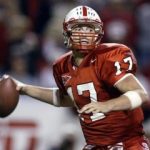
Joe Hortiz’s trade to get Ladd McConkey showed another strategy entirely. Rather than discard a draft pick to move up the mere three slots as Tom Telesco always had, he swapped a fourth round pick for the Patriots fifth.
The JJ Chart value for the trade broke down as :
- LAC’s 37th (530) and 110th (74) = 604 points
- NE’s 34th (560) and 137th (37.5) = 597.5 points
Joe “overpaid” to make this trade happen by 6.5 JJ Chart points. Tom Telesco’s history suggests he would have traded away his fifth round pick, which would have only been a 6-point “overpay,” but would have left the Chargers with eight selections instead of nine.
As the draft showed, if you’re committed to taking the best player available and have a deep scouting pool, you can slide back from the fourth to the fifth and still find fourth round talent. Although Joe Hortiz could have theoretically selected Cam Hart in the fourth and many would have lauded the pick, we’ll be able to grade the outcome of this move by how Tarheeb Still and Hart collectively produce for this team… and since Still was selected before Hart, it’s likely that Hart was the player the Chargers would have lost had Hortiz parted with the fifth rounder to grab Ladd.
Regardless of outcome, this move was a clinic in why Joe Hortiz’s process will outshine Tom Telesco’s tenure with the Bolts.
How to Grade Hortiz’s Scouting Moving Forward
This year will be tricky to be critical of Joe Hortiz’s selections, because he was largely left with the scouting team Tom Telesco left behind. The overall process is what fans should be extremely excited and hopeful for.
However, there’s one measuring stick fans should look to as an early-indicator of what’s to come. We already saw Joe’s process in action, but what should be most telling about his ability has an evaluator is how two specific selections perform: Justin Eboigbe and Tarheeb Still.
According to NFL Mock Draft Database, the average selection for Eboigbe was #143rd. Miranda Wilhelm and A.J. Schulte mocked Eboigbe to the Chargers in round six and five respectively, and the Chargers selecting him at #105 was considered a reach by a whole round.
An even starker contrast against Hortiz’s big board and the consensus was Tarheeb Still’s selection. NFL Mock Draft Database only had two mocks where Still cracked a roster, once in the sixth round to the Jets and once in the seventh to the Bengals. His average ranking was 272nd, 135 players lower (comfortably in UDFA territory, where the volatility of these rankings is significant) than where the Chargers drafted him.
Joe Hortiz and his staff stuck their necks out for these two players, and it’s clear they have a vision for each. Justin has the potential to be a creative and effective pairing with Poona Ford in the stunts Ryan Watkins pointed out Jesse Minter loves to throw at opposing offensive lines. As a fifth round pick, Tarheeb Still may be a sneaky special teams warrior thriving in the new hybrid kickoff scheme given is excellent tackling skills, with upside to be a solid apex defender for Minter.
Where the McConkey trade was a showcase in Joe’s elite draft approach, how these selections fare two selections will provide some takeaways on Joe’s ability to find diamonds in the rough.

I always felt Telesco didn’t have a clear understanding of what the coaches and schemes needed, which explains his tendency to pick “good” players in the first round. While he could identify top-tier talent (which is relatively easy—most fans on Stormcloud could tell you Joey Bosa would be a good player at pick #3), his skills as a talent evaluator were limited to early-round picks. He rarely matched players to the scheme in later rounds, showing a lack of understanding of football teams, schemes, and play styles. He simply evaluated talent without considering how it fit into the bigger picture. In contrast, Hortiz and Harbaugh demonstrate how to work together as a cohesive unit. Disagreements are inevitable, but Telesco never had the conviction or power that a Harbaugh-Hortiz combination has.
I also believe Telesco’s lack of trades was due to a shortage of connections in the league. This is speculative, but being hired as the “youngest GM ever” might have hindered him. He didn’t have the years to build a network of peers and was thrust into a top-level position among older, more experienced GMs. His frequent trade-ups suggest that other GMs took advantage of his inexperience, as he never got much in return—unlike Hortiz’s McConkey trade, as Kyle points out.
Despite a decade of mediocrity, we did get some production out of players like Herbert, Bosa, Williams, Ekeler, Mack, Hayward, and Slater. There are some diamonds, but I feel like the team was always built far too ‘top-heavy’, as in too much pressure on high-end players to perform without a solid base. These players were like cherries on top of a sundae that lacked substance, reflecting Telesco’s overall tenure. I would contrast this to Hortiz’s draft being more banana, chocolate sauce, cream, nuts…the base of a tasty meal, not just a tiny morsel.
I’m now hungry.


Nice article, Kyle.
I think Hortiz is going to be lightyears better than Telesco.
The one ‘move’ Hortiz made in the Draft that probably warrants evaluation but unfortunately we can never truly monitor was actually an omission. A non-move, as it were. He said after the Draft (on McAfee’s show, from memory) that he received a ‘great offer’ to trade back while on the clock at 1.05. We’ll never know what that offer was. But ultimately we chose Alt at 1.05 > trading back a few spots for [insert another OT (Fuaga/Fautana)] + whoever else we could’ve taken with the other pick(s) offered by the offering team (permanently shrouded in mystery).
Not trading back from 1.05 was an important philosophical and strategic call. It’s a move that could end up being legendary, eg, if Alt becomes significantly superior to the rest of the OTs from this class. It’s alsoa move that could end up being a missed opportunity to take two, or even three highly drafted players (depending on the terms of the trade that was offered) to speed up the transition of this roster from the Staley era.
I hope he made the right call!

Great write up Kyle. The GM role of roster building and accruing capital and scouting is really my passion. I just find it fascinating on all the little idiosyncrasies that create the bigger picture for the GM role. I was never a fan of Telesco as a GM since his third draft that featured the Gordon trade, followed up by the Mager selection. Just complete trash the whole way. Every year I would scout the players, do a ton of mock drafts to get a feel for the ADP of players only to watch time and again, Telesco go off the rails anywhere after round 1, while other organizations shined by pretty much followed the consensus with a little reach here and there, or by taking a falling player even though it might not be a position of need. Watching one draft of Hortiz, has to make you think what the hell the Spanos family was watching that kept Telesco around for 11 years? This offseason was IMO, more difficult than any in Telesco’s tenure as he never had to deal with a cap mess as great as we had, while also having to fill a bunch of positions with limited $. One could argue that the roster is stronger than any of Telesco’s, not from top heavy star power, but by the creation of QUALITY depth at most points on the roster, which was never the case under Telesco. As you pointed out, just the understanding that swapping picks and not trading them away altogether to move up the draft board, while not an Earth shattering concept, is a remarkable breath of fresh air in the approach to the draft. I have also noticed the contracts given out to most of the FA were one year deals. This has comp formula written all over it. Take players that might have been banged up or in a bad team situation and have them take a one year prove it deal with a team that most likely has a better coaching staff and QB. The player has the motivation and support to have a big season that will garner him a bigger payday in FA which should factor into the comp pick formula. Even the FA signings have been made with a clear focus and not just cheap dart throws to build “depth”. The funny thing is we are lauding Hortiz, for a masterclass, when in fact all he is really doing is, having a set plan/philosophy and following it, being responsible and using common sense. You figure this would be a pre requisite for any GM position, but apparently not?

[/et_pb_row]
[/et_pb_section]